Industrial & Institutional Projects
Commercial Asbestos Abatement
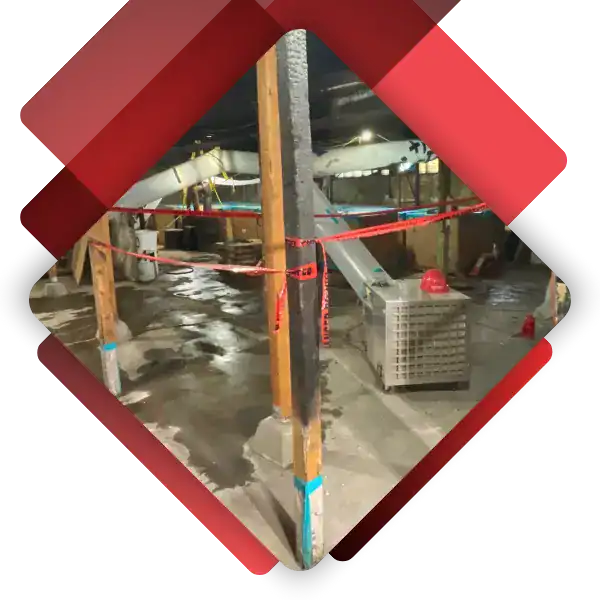
Archers Asbestos Abatement provides asbestos abatement for industrial, institutional, and commercial facilities across Oregon and SW Washington, supporting projects that require careful coordination, regulated work practices, and minimal disruption to active spaces.
Commercial asbestos abatement is typically required when construction, renovation, or repair work will disturb existing building materials. When regulated asbestos-containing materials are present, abatement must be completed before the broader project can move forward.
Renovation, Repair, and Remodeling Work
Asbestos abatement is often required when renovation or repair work will disturb existing building materials. Cutting into walls, removing flooring, replacing insulation, or opening ceilings can all impact materials that may contain asbestos, particularly in older buildings and facilities. While asbestos can remain stable when undisturbed, these activities increase the risk of releasing fibers into the air.
Demolition and Selective Removal
In commercial and multifamily settings, abatement is often required due to occupancy and worker exposure requirements. Offices, healthcare facilities, schools, and apartment buildings frequently trigger licensed abatement even for limited scopes of work.
Water, Fire, or Structural Damage
Damage from water intrusion, fire, or structural failure can compromise materials that previously posed little risk. Once asbestos-containing materials become damaged, friable, or unstable, they must be addressed before cleanup, drying, or reconstruction can proceed safely.
Commercial, Multifamily, & Occupied Buildings
In commercial and multifamily settings, asbestos abatement is commonly required due to regulatory requirements tied to occupancy and worker exposure. Projects in offices, retail spaces, schools, healthcare facilities, and apartment buildings often require abatement even for relatively small scopes of work.
Commercial asbestos abatement is not limited to a single building type or use case. Archers supports abatement projects across a wide range of commercial, institutional, and industrial environments, each with different access, occupancy, and operational considerations.
Offices & Mixed-Use Buildings
Tenant improvements, capital upgrades, and selective demolition often require abatement within occupied or partially occupied spaces. Work is commonly coordinated around tenant schedules and phased construction timelines.
Multifamily & Housing Authorities
Abatement in multifamily environments frequently involves shared systems, repeated unit layouts, and coordination with property management and residents. Projects may be phased by unit, floor, or building.
Healthcare & Medical Facilities
Medical environments introduce additional constraints related to access control, infection prevention, and continuous operations. Abatement scopes are often tightly sequenced to support renovations without disrupting care.
Education Campuses
Schools, universities, and public facilities often require abatement during limited shutdown windows or academic breaks, with strict documentation and inspection requirements tied to public oversight.
Industrial & Manufacturing Sites
Industrial facilities may involve mechanical systems, piping, structural components, or legacy materials that require controlled removal while maintaining production or plant operations.
Commercial asbestos abatement is rarely performed in isolation. Most projects involve multiple trades, overlapping schedules, and defined sequencing requirements. Archers works alongside general contractors, restoration teams, facility staff, and project managers to integrate abatement into the broader scope of work.
Project Planning & Communication
Abatement is planned to align with demolition, renovation, mitigation, or system upgrades already underway. Early coordination helps ensure regulated materials are addressed before follow-on trades mobilize, reducing downtime and avoiding rework or inspection delays.
Access, sequencing, and work windows are coordinated so abatement fits cleanly into the project schedule rather than disrupting it.
Insurance-Driven Projects & Loss Response
In water, fire, or structural loss scenarios, asbestos abatement is often required before mitigation or reconstruction can proceed. Archers regularly supports insurance-driven projects by responding quickly, documenting conditions clearly, and coordinating with restoration teams and adjusters.
This coordination helps keep recovery efforts moving while ensuring regulated materials are handled appropriately.
For insurance-related projects, Archers provides Xactimate line-item pricing to support estimating, review, and claim documentation. Clear, standardized pricing helps streamline communication between contractors, carriers, and property owners and reduces delays tied to scope or cost disputes.
Clear Handoff to Follow-On Trades
Once abatement is complete, work areas are documented and released so construction, mitigation, or restoration can proceed without re-entry concerns or regulatory issues. This clear handoff supports predictable project flow and minimizes interruptions during later phases.
Asbestos abatement can raise a lot of practical questions, especially when it’s part of a larger renovation, repair, or recovery effort. The questions below address common considerations around cost, timing, coordination, and next steps, and link to additional resources if you’d like to explore a topic in more detail.
How much does commercial asbestos abatement cost?
Costs vary based on the type of material, quantity, accessibility, containment requirements, and whether the building is occupied. Commercial projects often involve additional planning and coordination compared to residential work. We provide free estimates so scope and pricing are clearly defined before work begins.
How long do commercial asbestos abatement projects typically take?
Project timelines vary based on scope, materials, and site conditions. Some commercial abatement work can be completed in a single day, while larger or phased projects may take several days. In Oregon and Washington, timelines can also be affected by required notifications and regulatory waiting periods with agencies such as DEQ. We factor these requirements into scheduling early so abatement aligns with the broader project timeline.
How early should asbestos be addressed in a commercial project?
Asbestos should be identified as early as possible, ideally during planning or preconstruction. Addressing abatement early helps prevent delays, rework, or inspection issues once construction or repairs are underway.
Do you work on insurance-driven commercial losses?
In water, fire, or structural loss scenarios, asbestos abatement may be required before mitigation or reconstruction can proceed. We regularly support insurance-driven projects and coordinate with restoration teams and adjusters.
Do you provide Xactimate pricing for commercial projects?
For insurance-related work, we provide Xactimate line-item pricing to support estimating, documentation, and claim review. This helps streamline communication between contractors, carriers, and property owners.
What areas do you serve for commercial projects?
Our core service area includes Oregon and SW Washington. For larger or specialized commercial and institutional projects, travel outside this area may be considered.
See Our Service Areas »