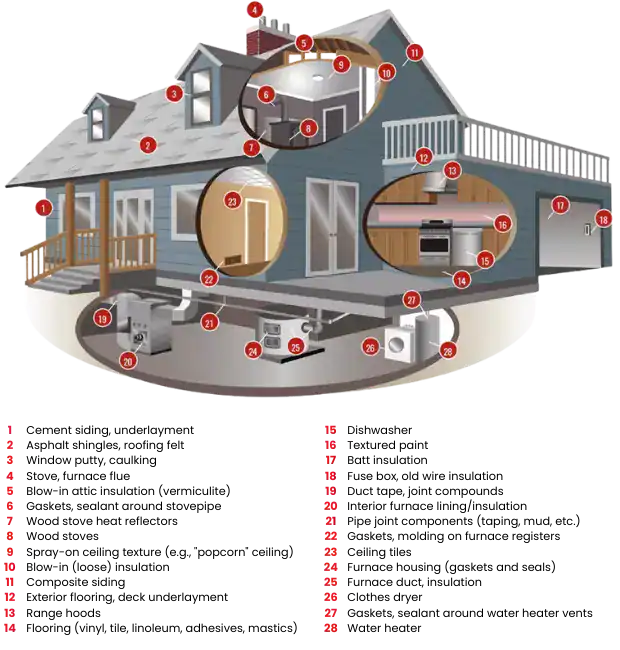
Asbestos is part of the built environment in many homes and commercial buildings. Used for decades because it was durable, affordable, and resistant to heat and moisture, we now understand the health risks associated with airborne fibers. Because of this, asbestos has become a highly regulated material that must be managed carefully when disturbed.
Table of Contents
Understanding Asbestos
Asbestos is a naturally occurring mineral made up of heat-resistant fibers. Because it is strong, durable, and able to withstand fire and moisture, it was widely used in building materials throughout the 20th century. Many homes and commercial buildings still contain asbestos in products that were designed to insulate, fireproof, or protect against heat and chemical damage.
Asbestos is generally stable when it stays intact. It becomes a concern when materials are cut, drilled, sanded, broken, or damaged during renovation, demolition, or water intrusion. These activities can release microscopic fibers into the air, and this is what today’s regulations are built around.
When asbestos may be disturbed, the work must be planned and completed through controlled abatement. Licensed contractors use containment, negative air systems, and specific removal methods to keep fibers from spreading and to meet the requirements set by state and federal agencies.
Asbestos-Containing Materials (ACMs)
Asbestos-Containing Materials, or ACMs, are any building materials that contain more than 1% asbestos by weight. This threshold is what federal and state agencies use to determine when a material is regulated and when licensed abatement is required.
The percentage may seem low, but even trace amounts are enough for a product to be classified as an ACM. Many common building materials fall into this category, including insulation, joint compound, vinyl floor tiles, mastic, cement siding, roofing felts, and various mechanical components.
A material cannot be identified as ACM by sight alone. Laboratory testing is the only way to confirm asbestos content, and test results determine whether a material becomes subject to Oregon DEQ, Washington L&I, and OSHA abatement rules.
Asbestos Heath RIsks
Asbestos becomes a health concern when materials are disturbed and microscopic fibers are released into the air. These fibers are too small to see and can be inhaled without noticing, which is why the material is regulated even at low concentrations.
Long-term exposure to airborne asbestos fibers has been linked to several respiratory conditions. The most well-known include asbestosis, a chronic lung disease caused by fiber accumulation in lung tissue, and mesothelioma, a rare cancer that affects the lining of the lungs or abdomen. Asbestos exposure is also associated with an increased risk of lung cancer, particularly for individuals who smoke.
These conditions develop slowly, often decades after exposure, which is why modern regulations focus on preventing fiber release at the source. The goal is to limit exposure for workers, building occupants, and anyone else who may be near materials that are being cut, removed, or repaired.
Because of this, any activity that could disturb asbestos must be handled with containment, controlled airflow, and defined work practices that keep fibers out of the breathing zone. This is the basis of today’s abatement standards and the reason licensed contractors play a critical role in managing asbestos safely.
Common Sources of Asbestos in Homes & Buildings
Asbestos was used in a wide range of building materials because it added strength, fire resistance, and durability. Many of these products remain in homes and commercial buildings today, especially those constructed before the early 2000s. Since asbestos cannot be identified visually, any material that may contain it should be tested before it is cut, removed, or disturbed.
Below are some of the most common locations and materials where asbestos may still be present.
Insulation and Mechanical Systems
Asbestos was frequently used in insulation products designed to handle high heat. This includes pipe wrap, boiler insulation, duct insulation, and attic insulation used in older homes. These materials can become friable over time, especially if they are damaged or water-logged.
Drywall, Joint Compound, and Textured Surfaces
Many wall and ceiling systems installed before the 1990s contained asbestos. Joint compound, certain plasters, and textured “popcorn” finishes often test positive. Sanding, scraping, or cutting these surfaces can release fibers quickly.
Flooring and Adhesives
Vinyl floor tiles, sheet flooring, and the black mastic adhesives used to secure them commonly contain asbestos. Even if the tiles look intact, the adhesive underneath may be regulated. Removing flooring without proper controls can disturb both the tile and the mastic.
Siding and Roofing Products
Asbestos was added to cement board siding, roofing shingles, roofing felt, and underlayment materials to improve strength and weather resistance. These materials are often non-friable when intact, but they can release fibers if they are sawed, broken, or deteriorated.
Cement Pipes and Exterior Components
Older sewer pipes, chimney flues, and other cement-based exterior materials sometimes contain asbestos. Cutting or demolishing these components during renovation requires testing and proper handling.
Furnace and HVAC Components
Asbestos shows up in older furnace panels, gaskets, HVAC duct tape, and refractory materials. These components can become brittle with age, making them more likely to release fibers when disturbed.
When Asbestos Testing is Required
Asbestos testing is required before any renovation, demolition, or repair work that may disturb building materials. In Oregon and Washington, these rules apply broadly to contractors, property managers, and anyone performing paid work. Testing is the only way to confirm whether a material is regulated and whether licensed abatement is required.
Homes Built Before 2004
For residential structures, testing is required for any home built before January 1, 2004. This date reflects when many manufacturers fully phased asbestos out of common building materials. Homes built before this point may contain asbestos in flooring, drywall compounds, siding, roofing, insulation, and mechanical components.
All Commercial Buildings
For commercial buildings, testing is required regardless of the year of construction. This includes multifamily housing (four units and above), offices, schools, retail spaces, industrial facilities, and any non-residential structure.
Homeowner Exemption
Oregon DEQ and Washington L&I allow owner-occupants of single-family homes to perform their own renovation or demolition work without licensed testing or abatement.
However, this exemption does not apply to:
Contractors
Property managers
Maintenance personnel
House flippers or investment owners
Anyone performing work for compensation
If a contractor is involved in any capacity, testing is mandatory, even if the homeowner requests otherwise.
Why Testing Matters
Asbestos cannot be identified visually. A certified inspector or industrial hygienist must collect samples and send them to an accredited laboratory for analysis. If a material tests above one percent asbestos by weight, it becomes a regulated Asbestos-Containing Material (ACM) and must be handled by a licensed abatement contractor.
Even materials that test below 1% can release fibers when disturbed, which is why testing remains a critical step in planning any project.
Where to Get Asbestos Testing
If you need a referral to a certified asbestos testing company, contact us and we can connect you with qualified, accredited firms we work with regularly.
Frequently Asked Questions
Asbestos comes with a lot of questions, especially for homeowners and contractors who encounter it during renovation or repair work. These FAQs cover the basics of what you should know before disturbing any material that may contain asbestos.
Do Oregon and Washington require asbestos testing before renovation or demolition?
Yes. Both Oregon DEQ and Washington L&I require asbestos testing before any work that may disturb building materials. In Oregon, testing is mandatory for homes built before 2004 and for all commercial buildings, regardless of age. In Washington, testing is required in all residential and commercial structures when materials may be disturbed by contractors or paid workers.
If I’m the homeowner, do I still have to test for asbestos?
Owner-occupants of single-family homes may be exempt from mandatory testing under certain circumstances, but this applies only when the homeowner is doing the work themselves. The moment a contractor, handyman, or any paid worker is involved, testing becomes required by law.
Even when testing is not legally required, disturbing asbestos without controls can be dangerous. For safety, it is always recommended that owner-occupants test suspect materials before beginning any renovation.
Why is asbestos testing required in newer commercial buildings?
Commercial buildings follow different rules than single-family residences. Oregon DEQ and Washington L&I require asbestos surveys for all commercial structures, regardless of the year they were built. This includes offices, retail spaces, warehouses, schools, multifamily housing, and mixed-use buildings.
Can asbestos be identified without laboratory testing?
No. Asbestos cannot be confirmed by sight or by age of the material. Many products manufactured into the early 2000s can still test positive. A certified inspector or industrial hygienist must collect samples and submit them to an accredited lab for analysis.
What materials most often contain asbestos in Oregon and Washington buildings?
Common sources of asbestos include:
Vinyl floor tiles and black mastic
Drywall joint compound and texture
Popcorn ceilings
Pipe and boiler insulation
Cement siding and roofing materials
Duct insulation and HVAC components
Roofing felt and underlayment
These are typical across homes and commercial buildings throughout Oregon and Washington.
If a material tests below one percent asbestos, is it still regulated?
Materials that contain more than one percent asbestos are classified as regulated Asbestos-Containing Material in both Oregon and Washington. Once a material is above this threshold, it must be removed or disturbed only by licensed asbestos abatement contractors and in accordance with DEQ or L&I rules.
Materials that test below one percent are not regulated in the same way, but they can still release fibers if they are cut, sanded, or broken. Because of this, many contractors in Oregon and Washington choose to handle sub-1% materials with added precautions or remove them under controlled conditions to reduce exposure risks.
Is asbestos dangerous if it is left alone?
Asbestos-containing materials are usually safe when they are intact and undisturbed. The risk comes from cutting, sanding, breaking, or damaging the material, which can release microscopic fibers into the air. If a surface is deteriorated, water-damaged, or likely to be disturbed during a project, testing is recommended.
Do you provide asbestos testing?
We do not perform asbestos testing. Testing must be completed by a certified asbestos inspector or industrial hygienist who is licensed to collect samples and submit them to an accredited laboratory. If you need a referral, contact us and we can connect you with qualified testing companies that work throughout Oregon and Washington.
Why this fits your requirement
Delayed: doesn’t do anything until scroll/touch interaction (plus a low-cost fallback).
Sitewide: one global snippet, no per-page edits.
Safe: only adds aria-label if it’s missing; doesn’t interfere with Bricks behavior.
Lightweight: no mutation observers unless you truly need them.
If your “Back to Top” sometimes renders later than the first scroll
Use this slightly more robust version (still scroll-delayed, but will keep checking briefly until it appears):
html
Copy code